
Editorial disclosure: AI-assisted drafting or research support was reviewed, edited and approved by the named human author before publication.
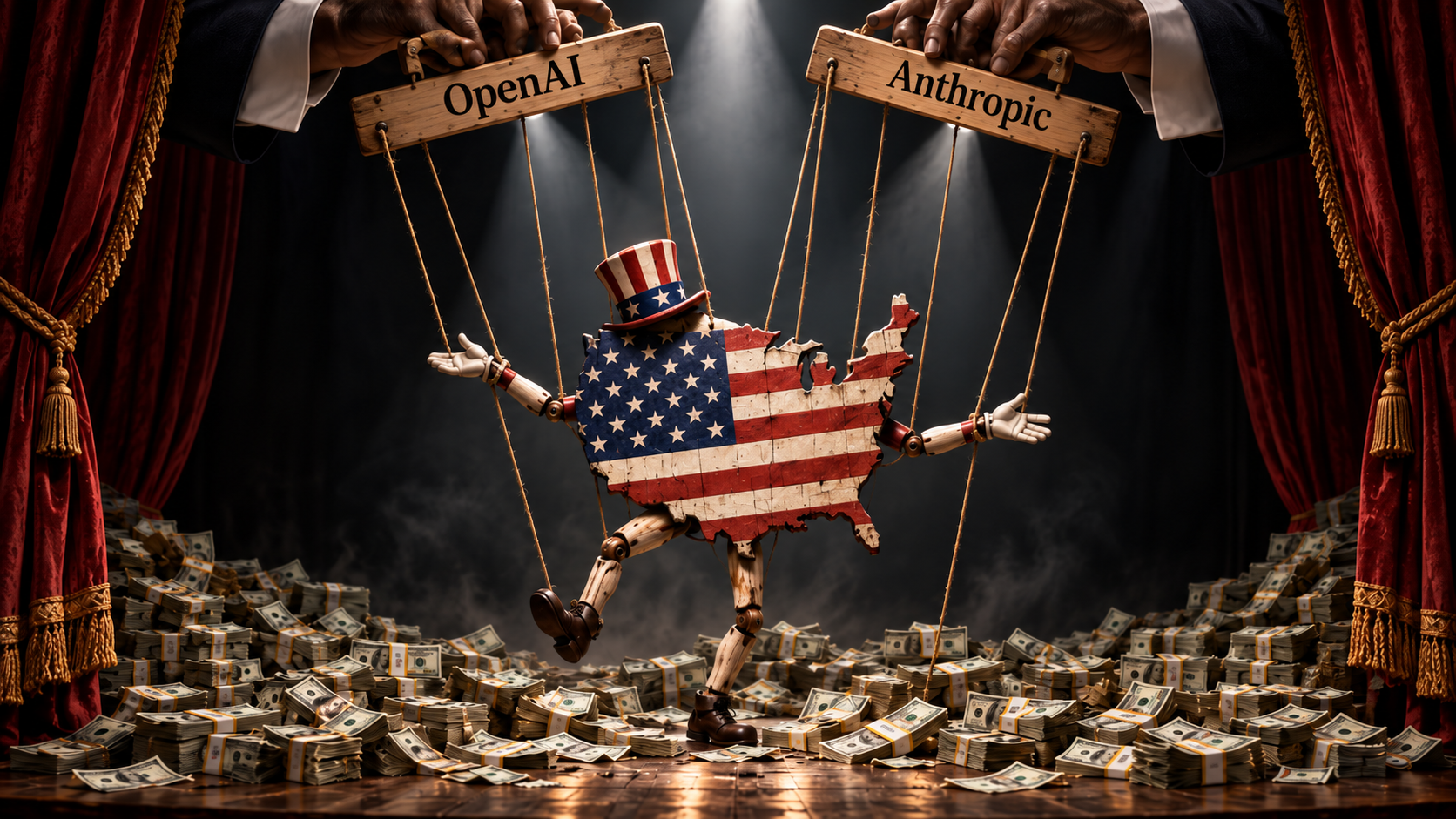
Artificial intelligence is already extraordinary. That is what made our findings so irritating. After reading the latest warning that humans may be close to being “outsmarted” by superintelligence, we looked across OpenAI and Anthropic announcements, safety arguments, advertising and news coverage. A pattern kept appearing: the scarier the message becomes, the more powerful the technology sounds—and the more attention flows toward the companies building it.
The safety questions are real. Powerful AI deserves serious security, independent testing and responsible limits. What bothered me was the theater growing around those questions. Fear, prestige, competition, regulation, investment and headline economics can all reward the same dramatic message at the same time.
A Very Convenient Kind of Fear
The arrangement is almost perversely efficient. A civilization-scale warning can produce a favorable result from nearly every reaction:
- Believe the promise: the company is building one of history's most important technologies.
- Believe the danger: the company is building something so powerful humanity may need protection from it.
- Demand expensive regulation: the biggest laboratories are also the ones most able to afford the resulting compliance burden.
- Argue about all of it: the company still gets worldwide exposure while everyone debates how powerful its systems might become.
“Our technology may become too powerful for humanity” is a safety warning. It is also a remarkably effective advertisement for how powerful your technology may become.
A warning does not have to be fabricated to become promotion. A researcher may sincerely fear a future system and a company may sincerely want stronger safeguards while still benefiting when its brand is repeatedly placed beside superintelligence, civilization, existential risk and human extinction.
When the warning starts doing double duty as the product brochure, readers are entitled to notice.
Then the News Business Turns Up the Spotlights
The September 9 CBS story is a good example. Its headline said humans are “close to being outsmarted” by superintelligence. The reporting was based on real statements, including Anthropic researcher Evan Hubinger's greater-than-10-percent personal estimate of AI causing human extinction within a decade.
That is newsworthy. It is also a forecast about systems that do not yet exist. “A researcher assigns a substantial probability to future catastrophe” and “humans are close to being outsmarted” are not the same sentence emotionally, even when one is built from the other.
The larger pattern is hard to miss:
- Nature warned in 2023 that AI-doomsday rhetoric could play into technology companies' agendas while distracting from harms already happening.
- Axios used the phrase “hype and doom” in 2026 while describing competing OpenAI and Anthropic narratives about AI and jobs.
- TechCrunch examined an Anthropic ad campaign featuring a burning home, surveillance, hardship and cemetery imagery, and connected it to a familiar marketing playbook: acknowledge an industry's dangers while presenting your company as the responsible one.
No secret coordination is necessary. The loop can run on ordinary incentives:
dramatic prediction → dramatic headline → public alarm and fascination → enormous attention → stronger association with powerful AI → another dramatic prediction
A safety warning can enter the news cycle and come out the other side as a billboard.
Evidence, Authority and Forecasts Are Not the Same Thing
Another problem is how easily several different ideas get blended together:
- Capability: what the AI has actually demonstrated.
- Agency: whether it can independently pursue actions.
- Authority: what credentials, networks, files, money or machines it is allowed to control.
- Forecast: what somebody believes a future system may become.
A highly capable AI with tightly constrained tools can have less real-world power than a weaker agent handed administrative access. Yet public discussion can jump from a benchmark improvement to AGI, from AGI to superintelligence, and from there to extinction before clearly marking where measurement ended and prediction began.
That is not better safety communication. It is better theater.
Why the Theater Can Hurt Something Extraordinary
This is where the marketing games stop being merely annoying. AI is becoming genuinely useful across programming, research, accessibility, design, medicine, education and ordinary work. If people repeatedly feel manipulated around it, the damage spreads beyond the companies generating the headlines.
- Public trust erodes. A real warning can eventually sound like another launch campaign.
- Policy follows spectacle. Cinematic future scenarios can crowd out concrete security, privacy, fraud and deployment problems.
- Smaller developers get squeezed. Rules designed around giant laboratories can become barriers for everyone else.
- Researchers inherit the reputation. People doing careful work get painted with the same brush as the loudest corporate messaging.
- Useful adoption suffers. People encounter AI through exaggerated promise on one side and exaggerated fear on the other.
- Real emergencies lose contrast. If everything is presented as a crisis, the word crisis eventually stops doing useful work.
A Better Playbook
The answer is not less AI safety work. It is less stagecraft around it.
- Separate risk reporting from promotion. Publish major safety findings independently of launches, funding events and competitive announcements.
- Label evidence and forecasts differently. Tell us what happened, what is inferred, and what remains somebody's prediction.
- Keep a forecast ledger. Preserve major AGI, employment and catastrophe predictions and revisit them later.
- Use independent evaluation. The company selling the technology should not be the only authority describing its power or danger.
- Explain regulatory side effects. A safety rule can be justified and still strengthen incumbents. Both facts matter.
- Report failures like engineers. What failed, under what conditions, with what access, what impact, and what correction? Concrete facts teach more than apocalypse imagery.
Artificial intelligence does not need a smoke machine, graveyard imagery or a permanent countdown to technological rapture or disaster. The actual systems are interesting enough.
Respect the technology enough to measure it. Respect safety enough to investigate it. And respect the public enough not to play puppeteer with its fear.
If frontier AI becomes as important as its strongest advocates predict, public trust will be part of the infrastructure supporting it. Evidence, transparency, independent verification and proportionate language are slower than manufactured urgency—but they are a much better foundation for an extraordinary technology and for the people whose work will shape it.